
Jyeshtha Nakshatra (ज्येष्ठा): Gana, Nadi, Rashi and Name Letters
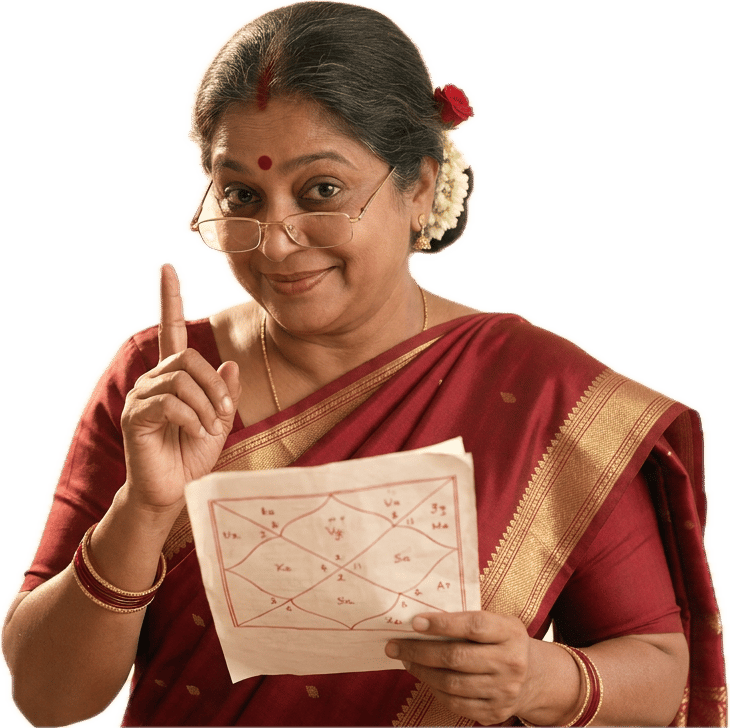
Jyeshtha nakshatra at a glance
Everything a biodata or a kundli match asks of Jyeshtha, in one card: ruling planet, deity, gana, nadi, yoni, rashi and the four name letters.
- Name in Hindi
- ज्येष्ठा
- Also written
- Kettai, Triketta, Jyeshta, Jyestha
- Ruling planet
- Mercury (Budh)
- Deity
- Indra
- Gana
- Rakshasa
- Nadi
- Adi
- Yoni
- Deer
- Rashi
- Vrishchika (Scorpio)
- Name letters
- No, Ya, Yi, Yu
The four padas and their letters
Each nakshatra is split into four padas (charans). Each pada has its own naming letter, and the pada is what the Charan field on a biodata asks for.
What Jyeshtha means
Jyeshtha means the eldest or the foremost, and the nakshatra is linked with seniority and standing. Its symbol is a circular amulet, sometimes shown as an earring or an umbrella. Its deity is Indra, king of the gods and lord of sky and rain. The red star at its heart is Antares, the heart of the scorpion.
What tradition links with Jyeshtha
- Traditionally linked with seniority and taking the lead in a family.
- Associated with protectiveness, the elder who looks after the rest, after Indra, the king of the gods.
- Read as capable, proud and self-reliant.
- Its Rakshasa gana is read as outspoken and strong-willed, a category in the tables rather than a judgement.
Writing Jyeshtha on your marriage biodata
In MyMarriageBio's builder, the Astrology step asks for five things. For Jyeshtha, they are:
- Nakshatra
- Jyeshtha
- Gan
- Rakshasa
- Nadi
- Adi
- Rashi
- Vrishchika (Scorpio)
- Charan
- Your pada, 1 to 4, from the kundli
The whole Astrology step is optional. Leave it out if your family does not match kundlis.
Jyeshtha in guna milan
Three of the eight kootas in guna milan are read straight from the nakshatra: nadi (8 of 36 points), gana (6) and yoni (4). Here is who shares each with Jyeshtha.
Adi nadi, like Jyeshtha
Two people with the same nadi have Nadi dosha, the koota families take most seriously. Astrologers do cancel it in some cases, so ask before ruling a match out.
Rakshasa gana, like Jyeshtha
The same gana scores all 6 gana points.
New to these terms? Gotra, nakshatra, rashi and Manglik, explained.
Frequently asked questions
What is the gana and nadi of Jyeshtha nakshatra?
Jyeshtha has Rakshasa gana and Adi nadi, and its yoni animal is the deer. On a biodata, fill Gan with Rakshasa and Nadi with Adi.
What are the name letters of Jyeshtha nakshatra?
Its four padas give the letters No, Ya, Yi, Yu, in order from pada 1 to pada 4. A child born in pada 1 was traditionally given a name starting with No.
Which rashi is Jyeshtha nakshatra in?
All four padas of Jyeshtha fall in Vrishchik rashi, so the rashi is the same whichever pada you were born in.
Is Jyeshtha a gandmool nakshatra?
Yes. Jyeshtha is one of the six, with Ashwini, Ashlesha, Magha, Mula and Revati, and it is the last nakshatra of Vrishchik, just before Mula begins Dhanu. Some families observe the tradition with a simple shanti puja and many do not. Ask your family and your astrologer what yours follows.
What is Jyeshtha called in Tamil and Malayalam?
Tamil writes it Kettai and Malayalam writes it Thrikketta, also spelled Triketta. Jyeshta and Jyestha are other spellings, and the builder's Nakshatra dropdown finds it under each of them.
Does Jyeshtha mean the eldest child?
No. The name means eldest or foremost, but it is a mark of rank, not birth order. A person born in Jyeshtha can be a first, second or only child.
About MyMarriageBio
MyMarriageBio is a marriage biodata maker for the moment you're ready to take the first step: fill in your details, pick a design you love, and share a beautiful biodata with your family in minutes.
Create Biodata Now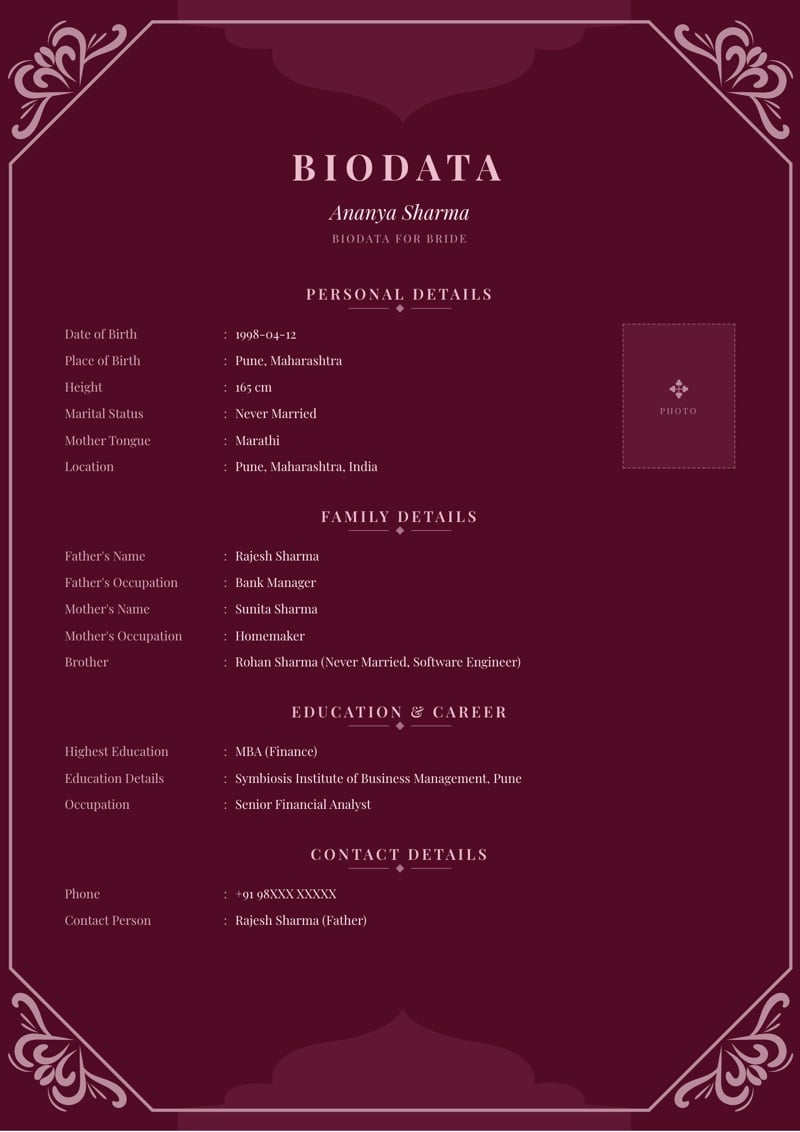
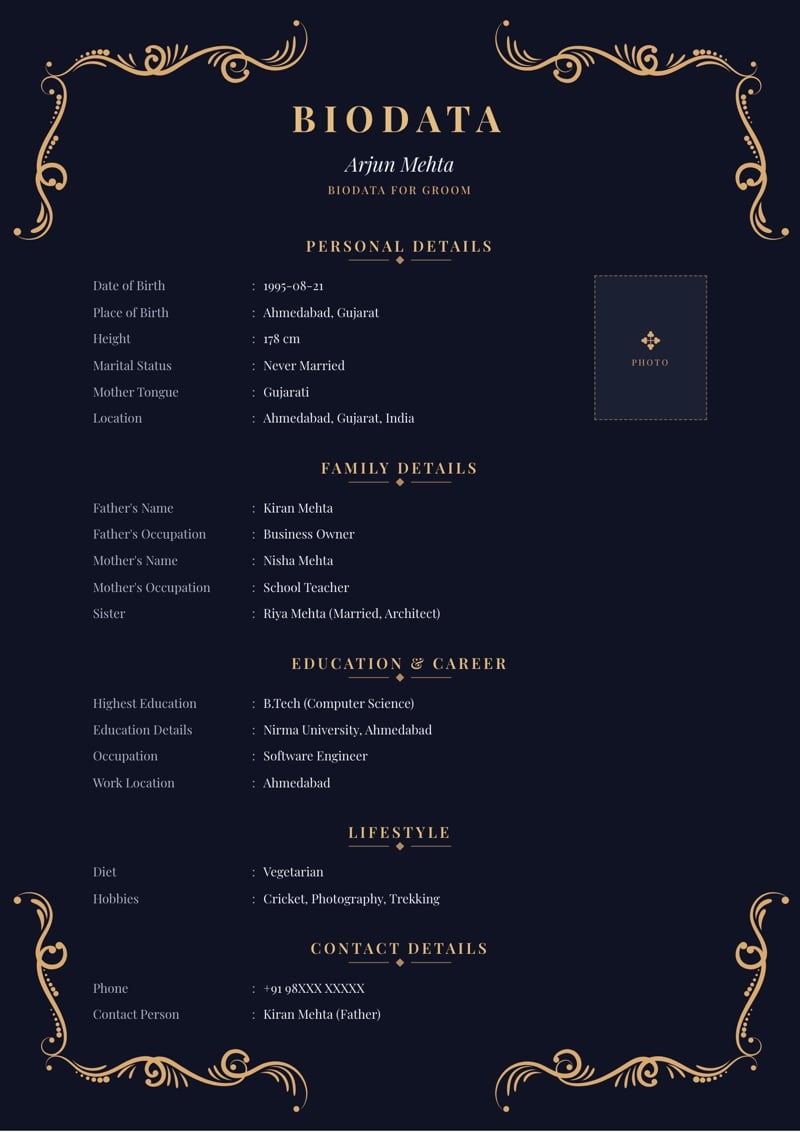
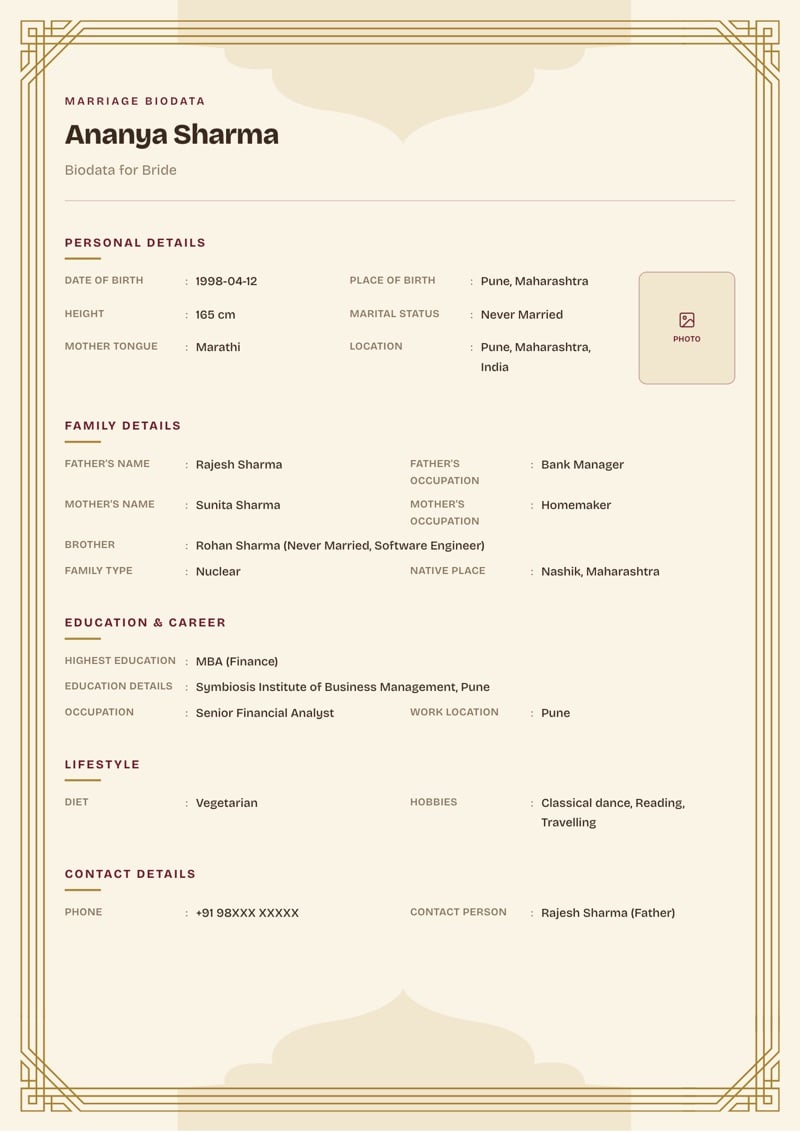
Read next
All 27 nakshatras for your biodata
Gana, nadi, yoni, padas and naming letters for every nakshatra.
Gotra, Nakshatra, Rashi, Manglik on a Marriage Biodata
What Gotra, Nakshatra, Rashi, and Manglik status actually mean, and why they show up on so many Hindu marriage biodatas.
How to Find Your Gotra: What Is My Gotra?
What a gotra is, how to find yours when nobody remembers, and where it goes on a marriage biodata.